Blog ·
Farm and Orchard Porta Potty Requirements in New Hampshire
Farms with 11 or more field hand-laborers must follow OSHA field sanitation rules. Pick-your-own orchards and farm stands also need restrooms for visitors.
By Dominic, owner · Reviewed
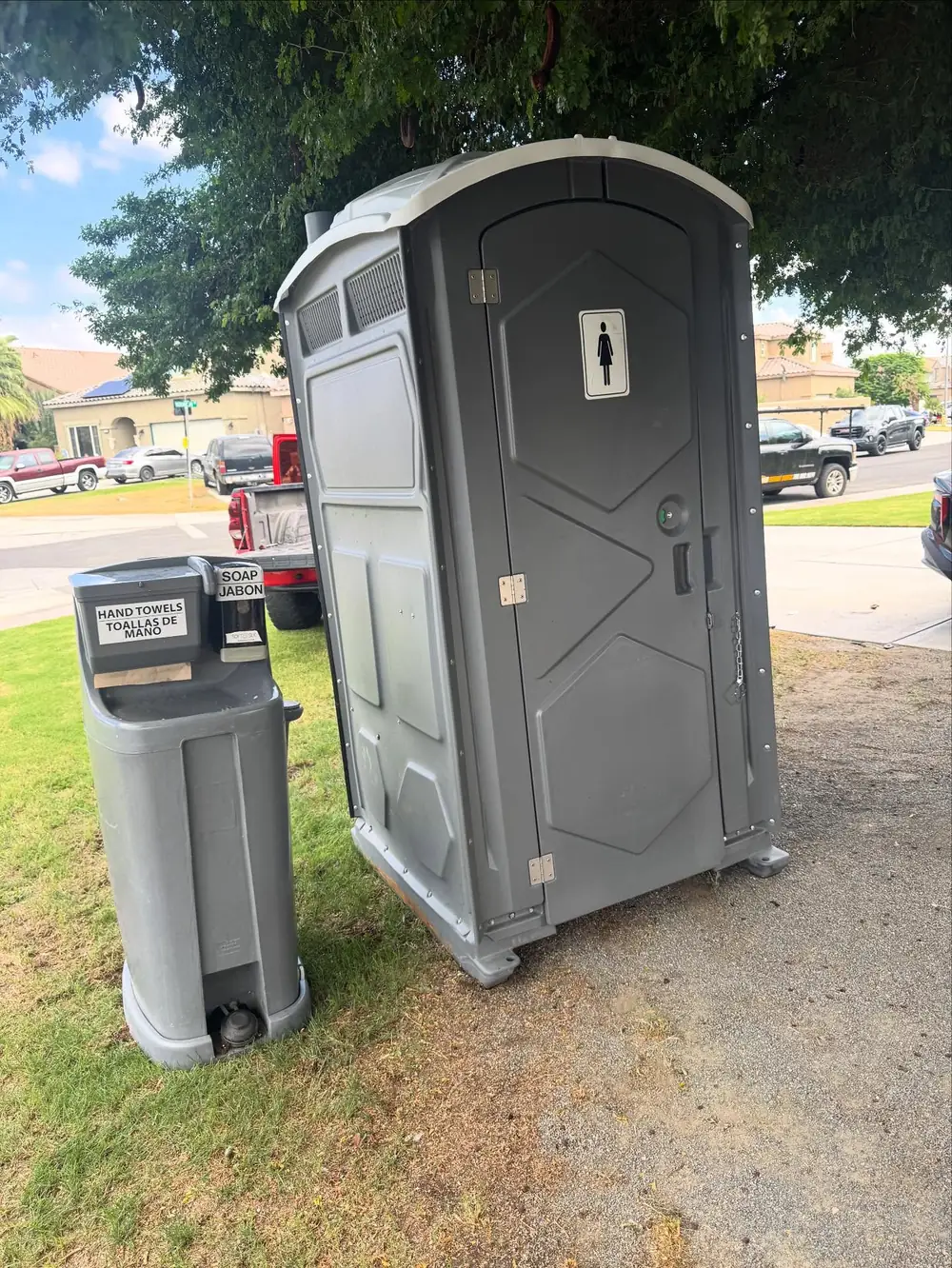
What does OSHA require for farm field sanitation?
OSHA's field sanitation standard, 29 CFR 1928.110, requires 1 toilet and 1 handwashing facility for every 20 field workers or fraction of 20. Each must be within a one-quarter-mile walk of each worker's place of work. Drinking water must also be provided in the field.
You can read the full rule on the OSHA field sanitation standard page.
Key points for farm owners:
- 1 toilet and 1 handwashing facility for each 20 workers, or fraction of 20.
- Within a one-quarter-mile walk of each hand laborer.
- Kept clean and in good working order.
- Workers must be allowed reasonable chances to use them.
If terrain makes the quarter-mile walk impossible, the rule allows facilities at the closest point vehicle access allows.
The rule also covers drinking water, which must be cool and in single-use cups or a fountain. Ask us about hand-washing stations to pair with each toilet.
Which farms must follow the field sanitation rule?
The OSHA field sanitation rule applies to agricultural establishments with 11 or more employees doing hand labor in the field on any given day. Workers who spend 3 hours or less in the field, including travel time, are exempt. Small family farms with 10 or fewer hand laborers fall outside the rule.
Hand labor includes picking, weeding, planting and pruning by hand. In New Hampshire, apple, berry and vegetable harvests are the busiest hand-labor times.
Crew size can change week to week. A farm with 6 workers in June may have 15 pickers in September.
Plan for your peak day, not your average day. Adding a unit for harvest season is simple.
Count every worker doing hand labor in the field that day, including seasonal and part-time pickers. Livestock care and work inside a packing house do not count as field hand labor. When in doubt, read the rule or ask OSHA directly.
How many porta potties does a farm crew need?
A farm crew needs 1 porta potty and 1 hand-washing station for every 20 field workers. A crew of 11 to 20 needs 1 of each. A crew of 21 to 40 needs 2 of each. Crews spread across far-apart fields may need more units to stay within the quarter-mile limit.
| Field workers | Toilets | Hand-wash facilities |
|---|---|---|
| 11–20 | 1 | 1 |
| 21–40 | 2 | 2 |
| 41–60 | 3 | 3 |
Our hand-washing stations are 2-sided with a foot pump and their own freshwater tank. They need no hookup, which suits open fields.
A deluxe flushing unit with a built-in sink is another option near a barn or packing shed.
Remember the quarter-mile walk limit. A large orchard with 2 crews working on opposite ends may need 2 sets of units even with only 20 workers. Placing units near each crew keeps breaks short and keeps pickers in the trees.
Where should porta potties go in an orchard or field?
Place farm porta potties within a one-quarter-mile walk of each worker, on level, firm ground. The service truck must park within about 15 feet of each unit. In orchards, a farm road or headland along the tree rows usually works. Move units as picking shifts to new blocks.
Many New Hampshire orchards sit on hillsides with soft ground after rain. Pick spots the truck can reach in wet weather.
- Use farm lanes, gravel pull-offs or mowed headlands.
- Keep units away from wells and water sources.
- Stake units on windy hilltops.
Need a unit moved to a new block mid-season? Call ahead and it can be scheduled with a service visit.
Our trucks need a firm lane to reach the unit. After a heavy rain, a muddy field can stop a service visit, so gravel or sod lanes are best for harvest season.
What do pick-your-own orchards need for visitors?
Pick-your-own orchards and farm stands need restrooms for the public, separate from OSHA's worker rule. A busy fall weekend can bring hundreds of visitors. Plan about 1 unit per 50 to 75 guests at peak, plus hand-washing stations, and at least 1 wheelchair-accessible unit.
September and October are peak season for apple picking in New Hampshire. Weekend crowds are much larger than weekday traffic.
- Put a cluster of units near parking and the farm stand.
- Add hand-washing stations next to them, since visitors handle food.
- Include a wheelchair-accessible unit on a firm, level path.
- Ask about extra service on busy weekends.
For large festivals or hayride events, a restroom trailer may suit visitors better. Trailers need level ground, a water spigot and a 110V/20A outlet or generator.